There’s something magical about roasted vegetables. They transform from ordinary and simple into caramelized, golden, and deeply flavorful with just a little heat and patience. Crispy edges, tender centers, and rich roasted aroma—this is the kind of side dish that can easily steal the spotlight from the main course.
Whether you’re trying to eat healthier, add more color to your plate, or simply make vegetables taste incredible, roasting is the easiest and most reliable method you can learn.
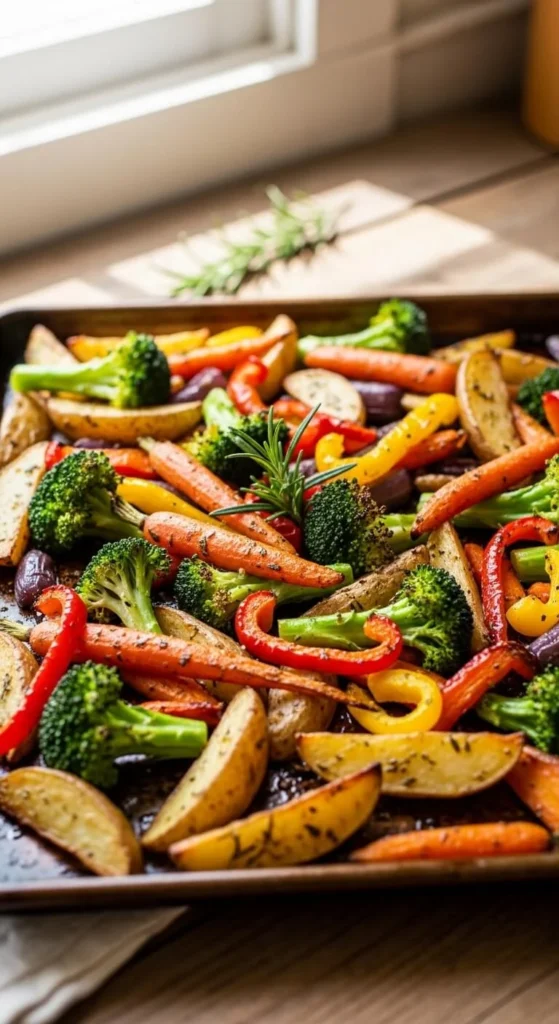
Let’s walk through everything you need to know to make perfectly roasted vegetables every single time.
Why Roasting Makes Vegetables Taste Better
Roasting works because of one powerful process: caramelization. When vegetables are exposed to high heat, their natural sugars begin to brown, creating deeper flavor, crispy textures, and beautiful color.
Instead of tasting bland or watery, roasted vegetables become:
- Slightly sweet
- Crisp on the outside
- Tender on the inside
- Rich and satisfying
This method works with almost every vegetable—from broccoli and carrots to zucchini and potatoes.
Step 1: Choose the Right Vegetables
Almost any vegetable can be roasted, but some perform especially well.
Great vegetables for roasting:
- Broccoli
- Cauliflower
- Carrots
- Potatoes
- Sweet potatoes
- Bell peppers
- Zucchini
- Onions
- Brussels sprouts
Try mixing colors and textures for the best results.
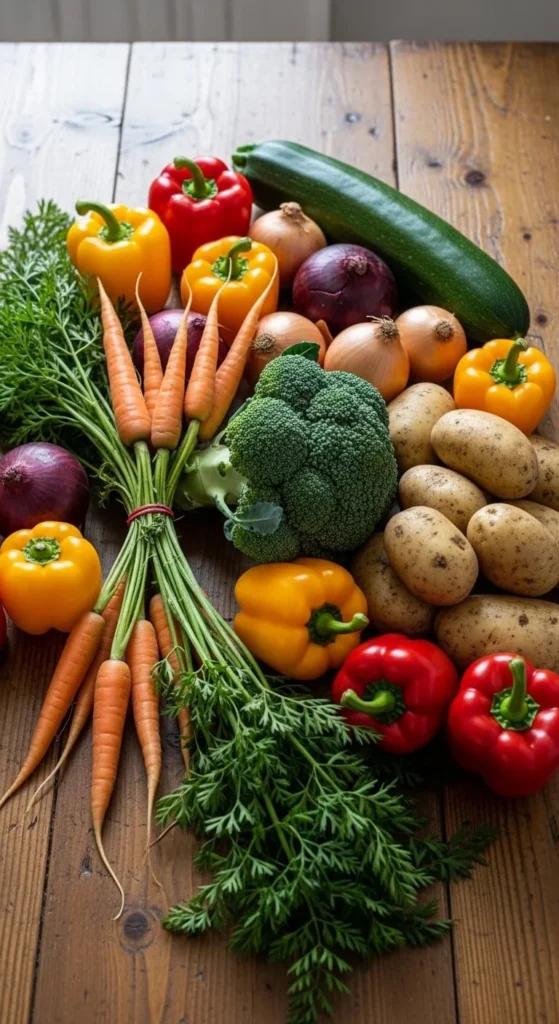
Tip: Hard vegetables (like carrots and potatoes) take longer to cook than soft vegetables (like zucchini and peppers). Cut them smaller so everything cooks evenly.
Step 2: Cut Vegetables to the Right Size
Uniform size is the secret to even roasting.
Follow these simple cutting guidelines:
- Cut vegetables into similar-sized pieces
- Smaller pieces roast faster and crisp better
- Larger pieces stay softer inside
Examples:
- Broccoli: small florets
- Carrots: thin slices or small chunks
- Potatoes: bite-sized cubes
- Zucchini: thick rounds
Avoid cutting pieces too small, or they may burn.
Step 3: Use the Right Amount of Oil
Oil helps vegetables roast instead of dry out. It also helps create those delicious crispy edges.
How much oil to use:
- About 1–2 tablespoons per large sheet pan
- Enough to lightly coat every piece
- Not so much that vegetables look greasy
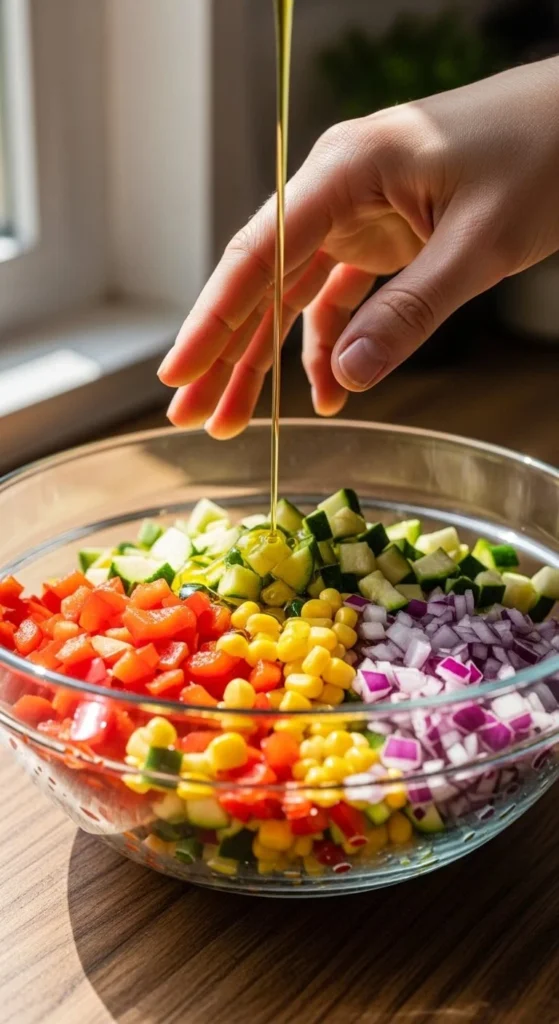
Place vegetables in a bowl, drizzle oil, and toss until evenly coated.
Step 4: Don’t Crowd the Pan
This is one of the most common mistakes.
When vegetables are too close together, they steam instead of roast. Steamed vegetables become soft, not crispy.
For best results:
- Use a large sheet pan
- Spread vegetables in a single layer
- Leave space between pieces
If needed, use two pans instead of one crowded pan.
Step 5: Roast at High Heat
High temperature is essential for caramelization.
Perfect roasting temperature:
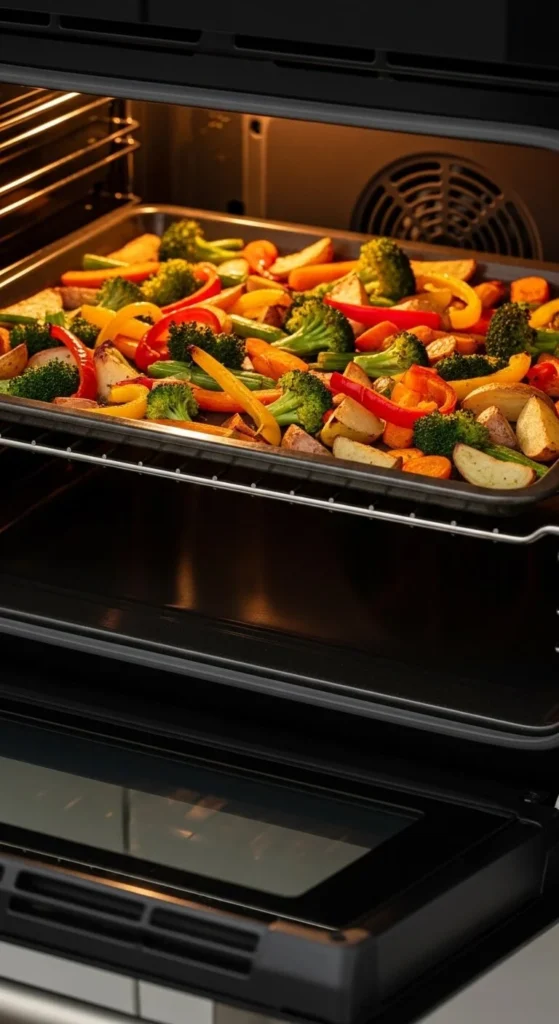
- 200–220°C (400–425°F)
This temperature allows vegetables to:
- Develop crispy edges
- Turn golden brown
- Cook evenly inside
Roasting time varies depending on the vegetable:
- Soft vegetables: 15–20 minutes
- Hard vegetables: 25–35 minutes
Flip halfway through cooking for even browning.
Step 6: Season for Maximum Flavor
Simple seasoning can make roasted vegetables taste incredible.
Basic seasoning:
- Salt
- Black pepper
Optional flavor additions:
- Garlic powder
- Paprika
- Dried herbs
- Fresh garlic
- Lemon juice after roasting
Add seasoning before roasting, and fresh ingredients like lemon juice after roasting for brightness.
Step 7: Know When They’re Done
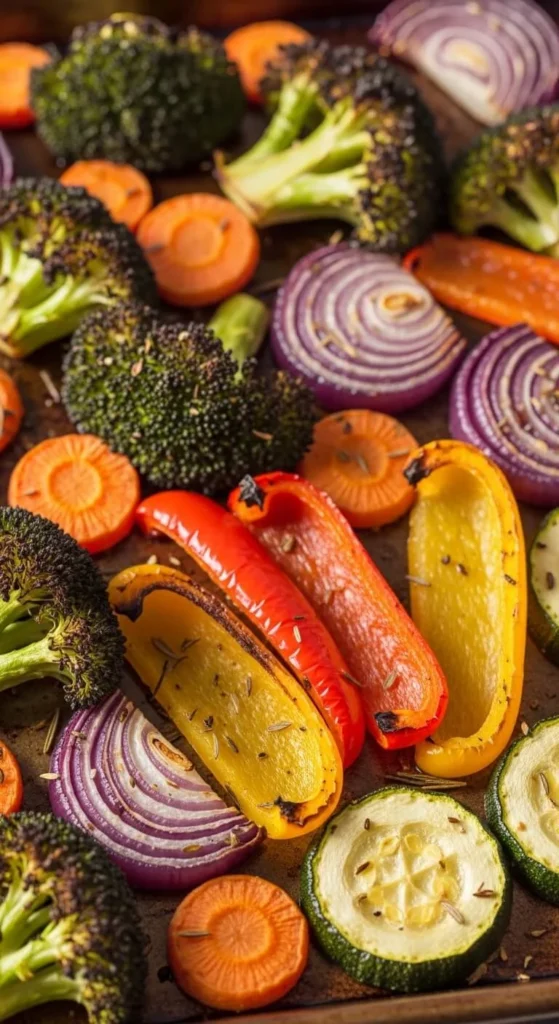
Perfectly roasted vegetables should look and feel like this:
- Golden brown edges
- Slight crispness outside
- Tender when pierced with a fork
- Rich roasted smell
If they look pale, roast a little longer.
If they burn too fast, lower the temperature slightly next time.
Best Tips for Perfect Results Every Time
Keep these quick tips in mind:
- Always preheat the oven fully
- Dry vegetables after washing (water prevents crisping)
- Use a large, heavy sheet pan
- Flip vegetables halfway through cooking
- Don’t overcrowd the pan
These small details make a huge difference.
Easy Flavor Variations to Try
Once you master basic roasting, try different flavor combinations:
Simple garlic roasted vegetables
- Oil
- Salt
- Pepper
- Fresh minced garlic after roasting
Lemon roasted vegetables
- Oil
- Salt
- Pepper
- Fresh lemon juice after roasting
Herb roasted vegetables
- Oil
- Salt
- Pepper
- Dried oregano or thyme
Each variation adds new personality to the dish.
Common Mistakes to Avoid
Avoid these mistakes for perfect results:
- Overcrowding the pan
- Using too little heat
- Skipping oil
- Not drying vegetables
- Cutting uneven sizes
Fix these, and your vegetables will turn out perfect every time.
Final Thoughts: Turn Simple Vegetables Into Something Amazing
Roasting vegetables is one of the easiest ways to make healthy food taste absolutely delicious. With just a few simple steps—proper cutting, enough oil, high heat, and spacing—you can create vegetables that are crispy, flavorful, and irresistible.
Once you try it, you’ll want to roast vegetables again and again. They work as a side dish, meal addition, or even a snack.
Save this guide and start roasting today—your future meals will be more colorful, flavorful, and satisfying.
Leave a Reply