Ever wondered why restaurant meats taste so juicy, tender, and packed with flavor—while homemade versions sometimes fall flat? The secret is almost always the marinade. A good marinade doesn’t just sit on the surface; it sinks in, tenderizes, and builds layers of flavor long before cooking even begins.
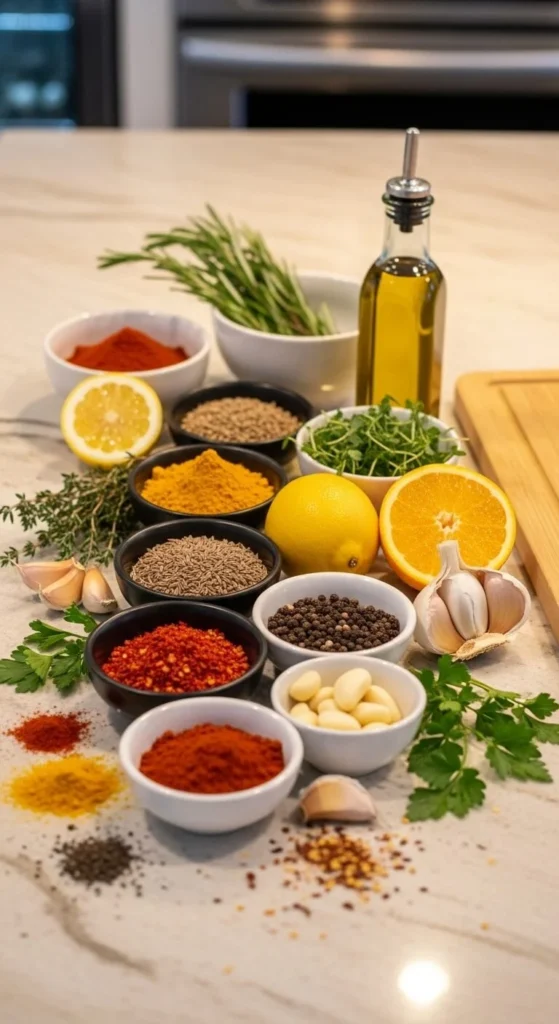
The best part? You don’t need fancy ingredients or complicated techniques. Once you understand the basics, you can create flavorful marinades for any meat using what you already have at home.
Let’s break it down step by step.
What Makes a Marinade Truly Flavorful?
A balanced marinade has three key elements. Master these, and you can mix and match endlessly.
1. Acid (for tenderness)
Acid helps soften the meat and allows flavors to absorb better. Great options include:
- Lemon or lime juice
- Vinegar (apple cider, white, or balsamic-style)
- Yogurt
- Tomato-based ingredients
2. Fat (for moisture)
Fat carries flavor and prevents the meat from drying out.
- Olive oil
- Neutral cooking oils
- Sesame oil (a little goes a long way)
3. Flavor boosters
This is where personality comes in:
- Garlic, ginger, onions
- Fresh or dried herbs
- Spices like paprika, cumin, black pepper, or chili flakes
- Natural sweetness from honey or fruit juice
When these three work together, magic happens.
How to Match Marinades to Different Meats
Not all meats need the same treatment. Here’s how to customize without overthinking it.
Chicken
Chicken loves bold flavors and absorbs marinades quickly.
- Use citrus, yogurt, or vinegar-based marinades
- Add garlic, paprika, and herbs
- Marinate for 30 minutes to 4 hours

Beef
Beef is richer and benefits from deeper, savory notes.
- Use oil, vinegar, and warm spices
- Add onion, black pepper, and garlic
- Marinate for 2 to 8 hours
Lamb
Lamb pairs beautifully with earthy and aromatic flavors.
- Use lemon juice or yogurt
- Add rosemary, garlic, and cumin
- Marinate for 4 to 12 hours
Seafood
Seafood is delicate and needs light marinades.
- Use citrus and oil
- Keep spices minimal
- Marinate for only 15 to 30 minutes
Simple Marinade Formulas You Can Memorize
You don’t need exact recipes every time. These formulas make improvising easy.
Everyday All-Purpose Marinade
- ¼ cup oil
- 2 tablespoons lemon juice or vinegar
- 2 cloves garlic, minced
- Salt and black pepper to taste
Spicy & Bold Marinade
- ¼ cup oil
- 1 tablespoon vinegar
- 1 teaspoon paprika
- ½ teaspoon chili flakes
- 1 teaspoon garlic paste
Creamy Tenderizing Marinade
- ½ cup yogurt
- 1 tablespoon lemon juice
- 1 teaspoon cumin
- 1 teaspoon garlic

How Long Should You Marinate?
Timing matters just as much as ingredients.
- 30 minutes–1 hour: Thin cuts, seafood
- 2–4 hours: Chicken, small beef cuts
- 6–12 hours: Larger beef or lamb cuts
Avoid marinating too long with strong acids, as they can make meat mushy instead of tender.
Pro Tips for Maximum Flavor
Want next-level results? Keep these tips in mind:
- Use glass or stainless steel bowls—avoid reactive metals
- Massage the marinade into the meat for better absorption
- Pierce thicker cuts lightly to help flavors penetrate
- Reserve a small portion of marinade (untouched) if you want to brush it on while cooking
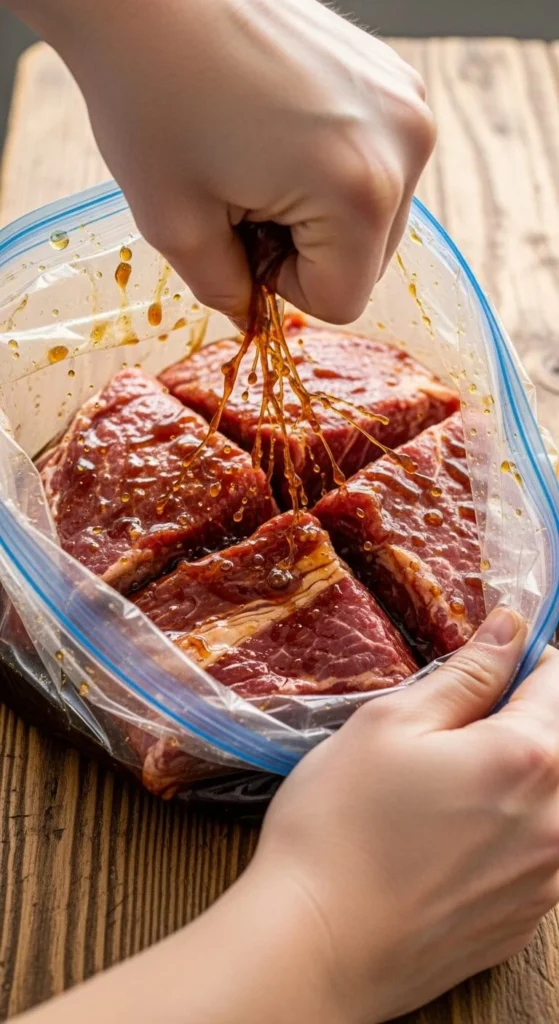
Cooking After Marinating: Don’t Lose the Flavor
Once marinated, cook the meat properly to lock everything in.
- Let meat rest at room temperature for 10–15 minutes before cooking
- Shake off excess marinade to avoid burning
- Cook using grilling, baking, pan-searing, or air-frying methods
After cooking, let the meat rest for a few minutes so juices redistribute.
Final Takeaway
Flavorful marinades are less about strict recipes and more about balance. Once you understand how acid, fat, and seasoning work together, you can create endless combinations tailored to your taste and the meat you’re using.
Experiment, trust your instincts, and don’t be afraid to adjust as you go. Your future meals will thank you.
Save this guide for later, and start turning everyday meats into unforgettable dishes!
Leave a Reply