There’s something deeply soothing about a pot of Irish stew slowly bubbling on the stove. It’s rustic, hearty, and built on simple ingredients that come together to create incredible depth of flavor. Whether you’re cooking for a cozy family dinner or prepping meals for the week, Irish stew delivers comfort in every spoonful.
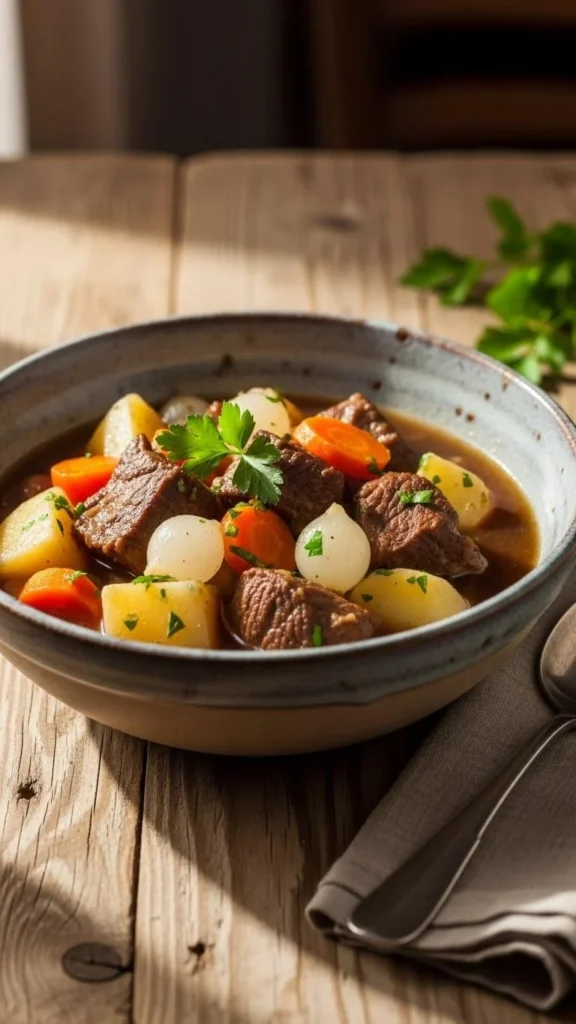
What makes a truly rich and comforting Irish stew isn’t fancy techniques—it’s patience, balance, and respect for the ingredients. Let’s break it down step by step so you can make a stew that tastes like it’s been simmering with love all day long.
Understanding What Makes Irish Stew Special
Traditional Irish stew is all about simplicity. It relies on a short list of humble ingredients, slowly cooked to bring out deep, savory flavors.
At its heart, Irish stew is known for:
- Tender meat that practically falls apart
- Soft, creamy potatoes that slightly thicken the broth
- A gentle, savory aroma from onions and herbs
No heavy spices. No complicated steps. Just slow cooking and thoughtful layering.
Choosing the Right Ingredients for Maximum Flavor
Great stew starts at the market. Choosing the right ingredients makes all the difference.
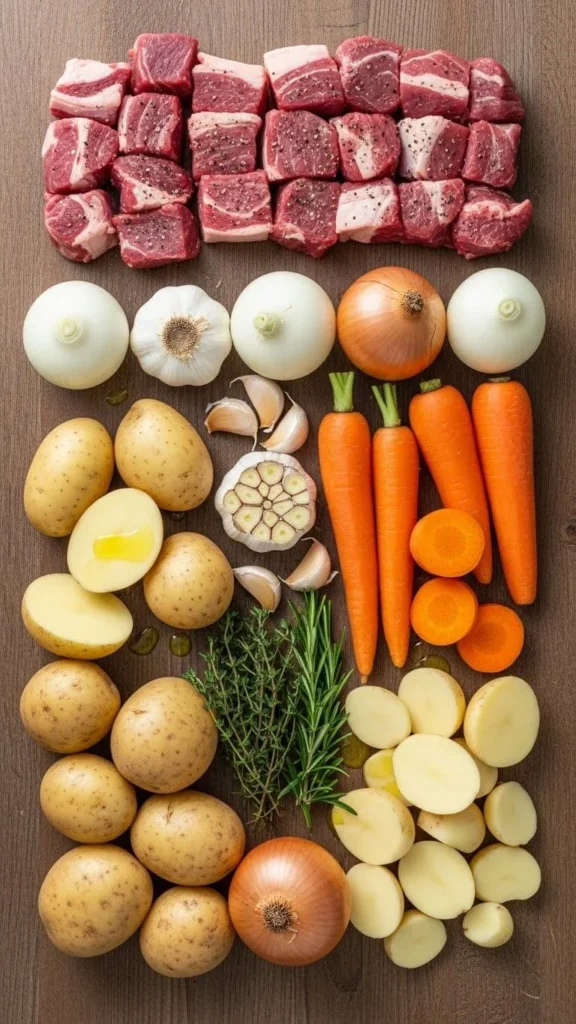
Key ingredients to focus on:
- Meat: Lamb shoulder is ideal. It has enough fat to stay juicy during long cooking and becomes beautifully tender.
- Potatoes: Use floury potatoes. They soften well and naturally thicken the stew.
- Vegetables: Onions and carrots are classic. Keep them chunky so they hold their shape.
- Liquid: A good-quality meat or vegetable broth gives richness without overpowering the dish.
- Herbs: Bay leaves, thyme, and parsley add warmth and freshness without dominating.
Tip: Bigger chunks work better than small ones—they cook slowly and stay satisfying.
Building Flavor from the Very First Step
One common mistake is throwing everything into the pot at once. Taking a few extra minutes early on creates a much deeper flavor.

Start with these steps:
- Heat a heavy pot over medium heat.
- Brown the lamb pieces in small batches.
- Remove the meat and gently sauté onions in the same pot.
Why this matters:
- Browning adds a savory base.
- Onions absorb the flavorful bits left behind.
- Your broth starts rich before simmering even begins.
This simple step is where your stew begins to feel special.
Layering the Stew the Right Way
Once your base is ready, it’s time to assemble the stew thoughtfully.
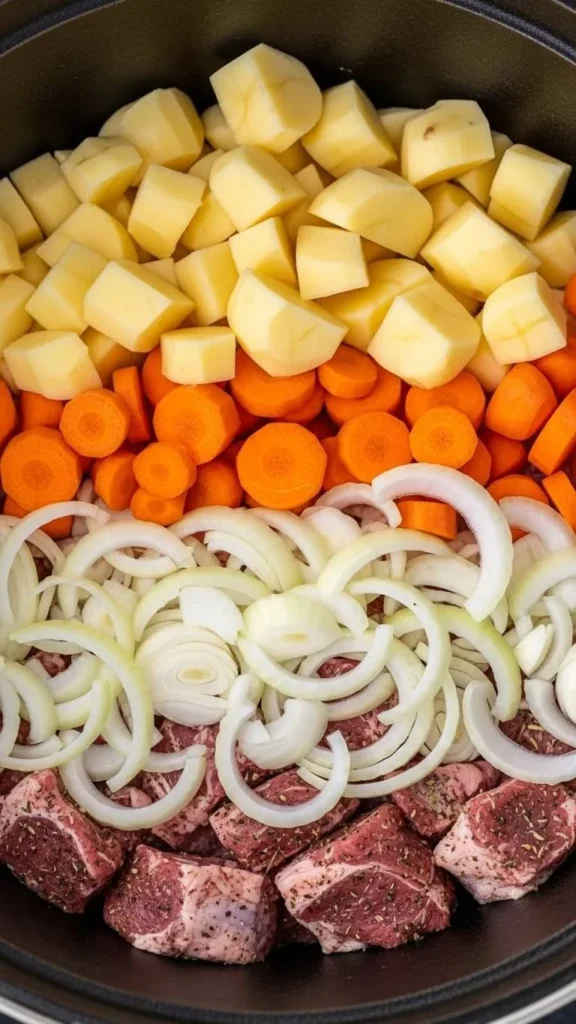
How to layer:
- Return lamb to the pot.
- Add onions, carrots, and garlic.
- Top with potatoes.
- Add herbs and bay leaves.
- Pour in broth just until ingredients are barely covered.
Avoid stirring too much at this stage. Gentle layering keeps the potatoes intact and helps the stew cook evenly.
Slow Simmering: Where Comfort Is Created
Now comes the most important part—time.
Bring the pot to a gentle simmer, then lower the heat and cover. Let it cook slowly.
What to expect during simmering:
- Lamb becomes tender after 1½ to 2 hours.
- Potatoes soften and release starch, thickening the broth.
- Flavors blend into a deep, comforting taste.
Resist the urge to rush. Low and slow is the secret to that “hug-in-a-bowl” feeling.
Optional tip: If the stew looks too thin near the end, gently mash a few potatoes against the side of the pot and stir them in.
Finishing Touches That Make It Truly Comforting
Right before serving, small adjustments make a big impact.
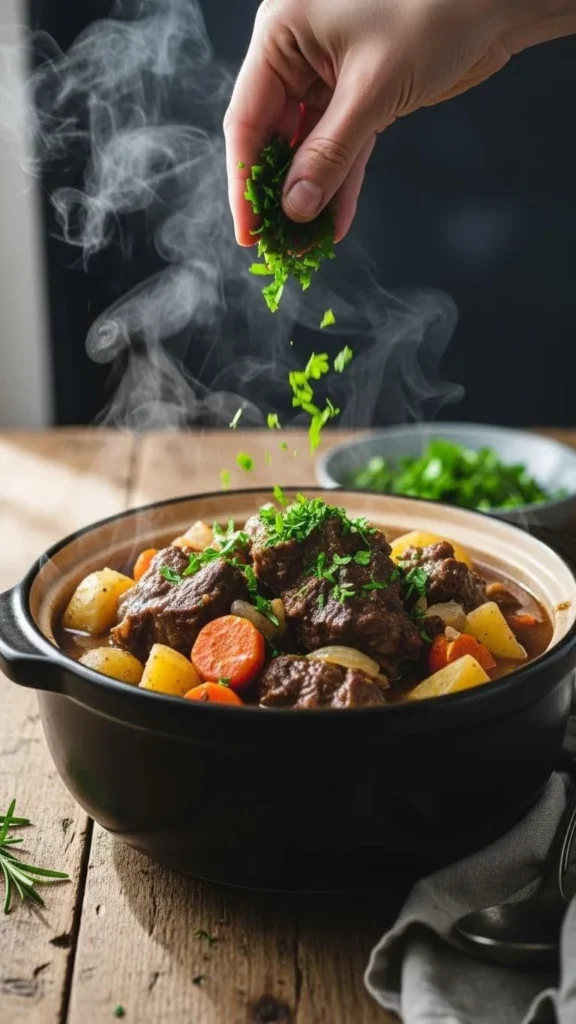
Final touches:
- Remove bay leaves.
- Taste and adjust salt gently.
- Add freshly chopped parsley for brightness.
Let the stew rest for 10–15 minutes before serving. This allows flavors to settle and the texture to thicken slightly.
Serving and Enjoying Irish Stew
Serve Irish stew hot, straight from the pot, with simple sides that don’t compete with its warmth.
Great serving ideas:
- Crusty bread for dipping
- A simple green salad
- Steamed vegetables on the side
This stew also tastes even better the next day, making it perfect for leftovers.
Final Takeaway
Irish stew proves that comfort food doesn’t need to be complicated. With quality ingredients, gentle browning, and slow simmering, you can create a dish that feels rich, cozy, and deeply satisfying.
If you love meals that warm both the kitchen and the heart, this is one recipe worth mastering. Save this for later, and make it the next time you crave real comfort food. 🍲
Leave a Reply