When a cold or flu hits, your body craves warmth, comfort, and something that feels like a hug in a bowl. That’s where a healing soup comes in. Steaming, nourishing, and packed with soothing ingredients, this kind of soup can help you feel better when you’re under the weather—and at the very least, it makes resting a lot more pleasant.

This guide will walk you through how to make a simple, comforting healing soup at home using everyday ingredients. No complicated steps, no fancy tools—just real food that supports your body when it needs it most.
Why Healing Soup Works So Well
There’s a reason soup is a go-to remedy across cultures. It’s not just tradition—it actually helps.
Here’s why healing soup is so effective when you’re sick:
- Warmth helps congestion by loosening mucus and soothing the throat
- Hydration is easier when you’re sipping broth throughout the day
- Gentle ingredients are easier to digest when your appetite is low
- Aromatics like garlic and ginger can make breathing feel clearer
Most importantly, soup is comforting. And when you’re sick, comfort matters.
Key Ingredients for a Healing Soup
A good healing soup doesn’t need a long ingredient list. Focus on simple, nourishing foods that work together.
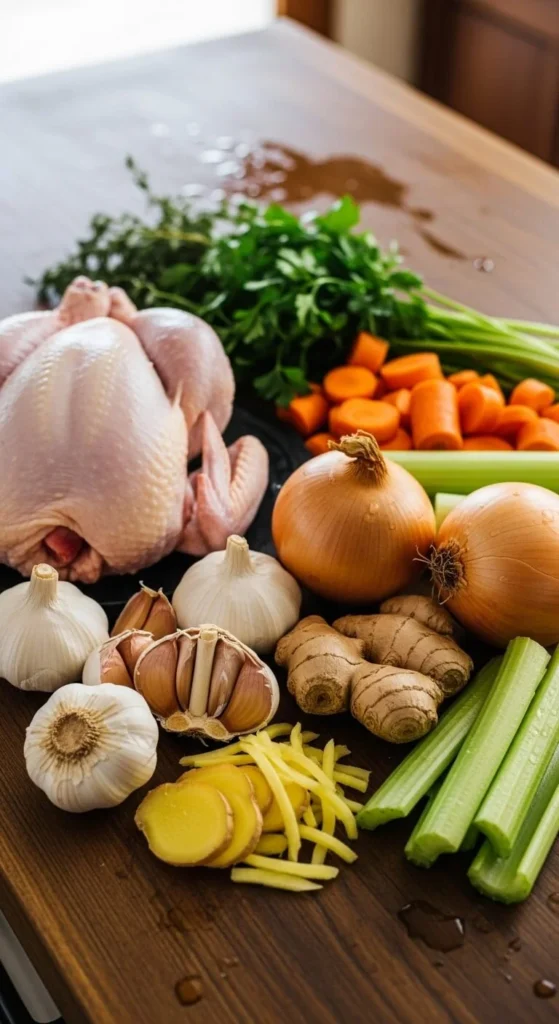
Core ingredients to include:
- Bone-in chicken or vegetables – for a rich, nourishing base
- Onion – adds depth and natural sweetness
- Garlic – comforting and aromatic
- Fresh ginger – warming and soothing
- Carrots & celery – gentle vegetables that add nutrients
- Salt & black pepper – simple seasoning is best
Optional add-ins (use what you have):
- Fresh herbs like parsley or cilantro
- A squeeze of lemon juice at the end
- Small noodles or rice for extra comfort
Step-by-Step: How to Make Healing Soup
This method is flexible, forgiving, and perfect for low-energy cooking days.

1. Start with the aromatics
In a large pot, add a little oil and gently sauté:
- Chopped onion
- Sliced garlic
- Fresh ginger
Cook on low heat until soft and fragrant. Don’t rush this step—it builds the soul of the soup.
2. Add the base
Add your chicken (or vegetables if you prefer), followed by:
- Carrots
- Celery
- Enough water to fully cover everything
Bring it to a gentle boil, then reduce to a slow simmer.
3. Simmer slowly
Let the soup simmer uncovered for 40–60 minutes. The goal is a light, flavorful broth—not a rolling boil.
Skim off any foam that rises to the top for a clearer soup.
Seasoning and Gentle Flavor Boosts
Healing soup should taste clean and soothing, not heavy or spicy.

Season thoughtfully:
- Salt gradually, tasting as you go
- A small pinch of black pepper is enough
- Add herbs in the last 10 minutes for freshness
If you like, finish with:
- A squeeze of lemon juice for brightness
- A drizzle of olive oil for richness
How to Customize for Your Needs
One of the best things about healing soup is how adaptable it is.
For sore throats:
- Keep the broth lighter
- Skip heavy add-ins
- Sip slowly while hot (not boiling)
For low appetite:
- Strain the broth and drink it on its own
- Add soft rice or noodles if you can tolerate them
For extra comfort:
- Shred the cooked chicken and return it to the pot
- Add more warm broth to keep it soothing
Listen to your body—it knows what it needs.
Serving and Storing Your Soup
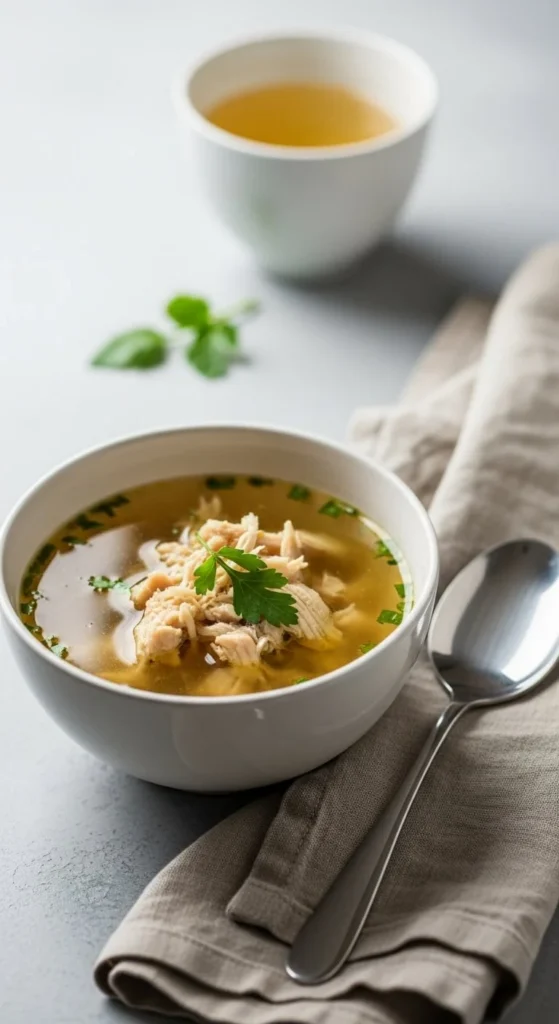
Serve your soup:
- Hot and fresh
- In small portions you can finish easily
- With soft bread or plain crackers if desired
To store:
- Refrigerate for up to 3 days
- Reheat gently to keep flavors clean
- Add fresh herbs after reheating for a brighter taste
Final Thoughts: Comfort in Every Spoon
Healing soup isn’t about being fancy or perfect—it’s about care. It’s warmth when you’re tired, nourishment when you’re weak, and comfort when you need it most.
Once you make this soup a few times, you’ll start adjusting it instinctively—more ginger here, extra broth there. That’s the beauty of it.
Save this recipe for the next time you or someone you love needs a little extra care. A pot of healing soup is always a good idea. 💛
Leave a Reply