Dinner time can feel like a daily battle—different tastes, busy schedules, picky eaters, and the eternal question: “What’s for dinner?” But family dinners don’t have to be rushed or stressful. With a little planning and the right mindset, they can become the most anticipated part of the day: a time to reconnect, laugh, and enjoy good food together.

Below are practical, realistic ways to turn ordinary meals into family dinners everyone genuinely looks forward to.
Make Dinner About More Than Just Food
The first step is shifting the goal. Family dinner isn’t just about eating—it’s about connection.
When the table feels welcoming, people want to show up. Try these small changes:
- Sit together at the table (even if it’s just 20 minutes)
- Put phones away or keep them off the table
- Light a candle or play soft background music
- Start a simple tradition, like sharing one good thing from the day
When dinner feels special, the food automatically tastes better.
Plan Meals With Everyone in Mind
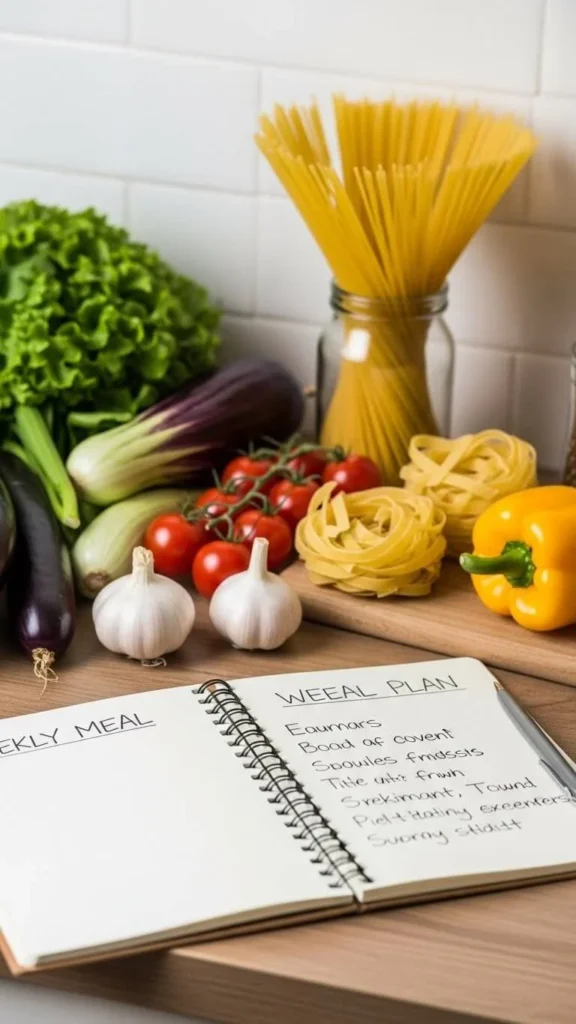
One of the biggest reasons family dinners fail is lack of planning. You don’t need complicated menus—just thoughtful ones.
Try this approach:
- Ask family members to name 2–3 favorite meals
- Rotate those favorites throughout the week
- Balance comfort food with healthier options
- Keep a “backup meal” for hectic nights
This way, everyone feels included, and you’re not guessing every evening.
Keep Recipes Simple (But Exciting)
Family dinners don’t need restaurant-level recipes. In fact, simpler is often better.
Focus on:
- Familiar flavors with small twists
- One-pan or one-pot meals
- Recipes that scale easily for leftovers
Easy crowd-pleasers include:
- Baked chicken with seasoned potatoes
- Creamy pasta with vegetables
- Tacos or wraps with build-your-own toppings
- Rice bowls with protein, veggies, and sauces
The goal is food that feels comforting and satisfying.
Get Everyone Involved
When people help make dinner, they’re more excited to eat it. Even young kids or tired teens can participate.
Ways to involve the family:
- One person washes veggies
- Another sets the table
- Kids choose a side dish
- Someone helps stir or taste-test
This turns dinner prep into shared time instead of a solo chore.

Create a Predictable Dinner Rhythm
Consistency builds anticipation. If family dinner happens randomly, it’s easy to skip. When it’s predictable, it becomes a habit.
Try:
- Setting a regular dinner time
- Having theme nights (Taco Tuesday, Pasta Friday)
- Keeping certain traditions weekly
People love knowing what to expect—and having something familiar to look forward to.
Make the Table Feel Inviting
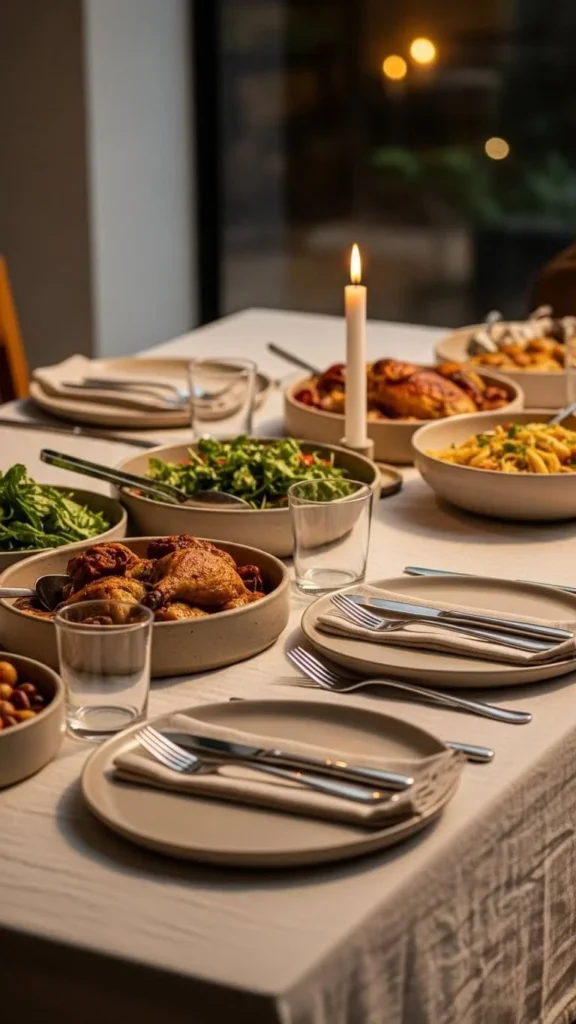
You don’t need fancy dishes to create a welcoming table.
Small details go a long way:
- Serve meals family-style in the center
- Use real plates instead of eating from containers
- Add a simple centerpiece like fruit or flowers
- Sit down together instead of eating in shifts
Encourage Conversation, Not Complaints
The table sets the emotional tone of dinner. Try to keep it positive.
Conversation starters that work:
- “What made you laugh today?”
- “What’s something you’re excited about?”
- “What’s one thing you learned this week?”
If complaints pop up, gently redirect. Dinner should feel safe, relaxed, and enjoyable—not tense.
Embrace Imperfect Nights
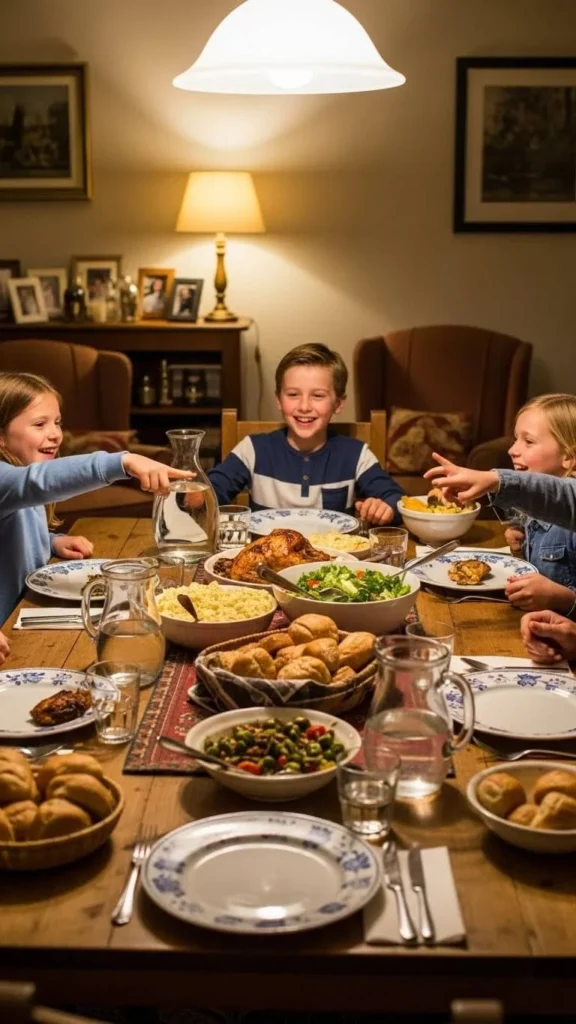
Not every family dinner will be magical. Some nights will be loud, messy, or rushed—and that’s okay.
Remember:
- Frozen pizza still counts as dinner together
- Takeout eaten at the table still matters
- Laughter matters more than perfect meals
What your family will remember isn’t the recipe—it’s the feeling of being together.
Final Takeaway: Make It About Togetherness
Family dinners don’t need to be perfect to be meaningful. With simple planning, shared responsibility, and a focus on connection, dinner can become something your family actually looks forward to each day.
Start small. Pick one idea from this list and try it this week.
Save this article for later and come back whenever dinner feels overwhelming—you’ve got this. 🍽️
Leave a Reply